The Diagnosis of Mineral Deficiencies in Plants by Visual Symptoms
Published by His Majesty's Stationary Office — 1943
— Crown Copyright Reserved —
FLAX IN SAND CULTURE — from the 1951 edition
by Thomas Wallace, M.C., D.Sc., A.I.C.
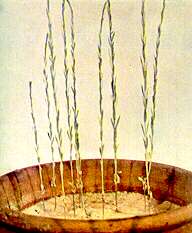 041. Flax Plants
Nitrogen deficiency
Growth small; stems erect and thin, branching suppressed; leaves erect, pale
green or yellow; early defoliation of lower leaves.
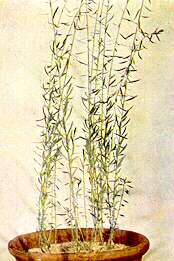 042. Flax Plants
Phosphorus deficiency
Stems thin and upright; branching restricted; leaves dull green.
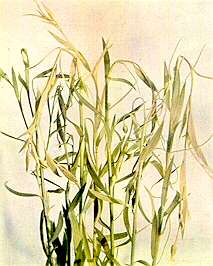 043. Flax Plants (Upper Portions)
Calcium deficiency
Tip growths chlorotic; stems collapse and tip portions die.
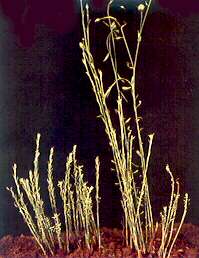 044. Flax Plants
Calcium deficiency (soil acidity complex)
Field plants showing chlorosis and die-back of tip growths on acid soil.
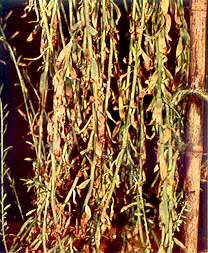 045. Flax Plants (Lower Stem Portions)
Magnesium deficiency
Older leaves tip yellowing, changing to browning.
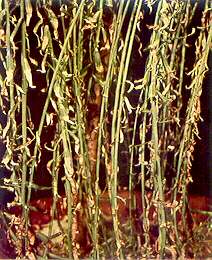 046. Flax Plants (Lower Stem Portions)
Potassium deficiency
Leaves browning of tips.
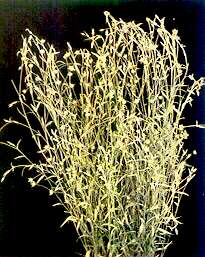 047. Flax Plants
Iron deficiency
Severe chlorosis, especially near tips.
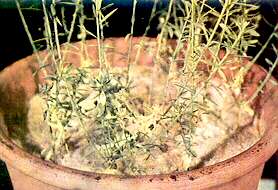 048. Flax Plants
Manganese deficiency
Stunting; yellowing of tip leaves (cf.
Plate No. 049, boron deficiency).
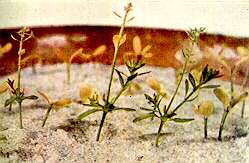 049. Flax Plants
Boron deficiency
Stems thickened and stiff; tip leaves yellow and fail to expand; growing
points die (cf.
Plate No. 048, manganese deficiency).
| Index | ||
|---|---|---|
|
|
|
|
| Top of Page | ||
Color Pictures of Mineral Defeciencies in Plants – 1943
Using Hydroponics to Understand the Earth's Life Processes
Understanding Colloidal Suspensions
" The Art of Healing Ourselves "
The Diagnosis of Mineral Deficiencies in Plants by Visual Symptoms
by Thomas Wallace, M.C., D.Sc., A.I.C.
on the Atomic Level
The Tortoise Shell Hydroponic Reference Center
Plants need to absorb what you feed them.
Only You can bring Good Health and Healing into Your Body.