The Diagnosis of Mineral Deficiencies in Plants by Visual Symptoms
Published by His Majesty's Stationary Office — 1943
— Crown Copyright Reserved —
CARROTS IN SAND CULTURE — from the 1951 edition
by Thomas Wallace, M.C., D.Sc., A.I.C.
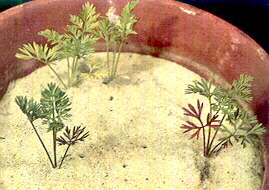 220. Carrot Plants
Nitrogen deficiency
Growth dwarfed and thin; leaves pale green and older leaves yellow and
red tints and die off early.
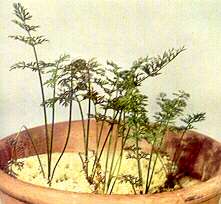 221. Carrot Plants
Phosphorus deficiency
Growth dwarfed and thin; older leaves strong purple tints and die off early.
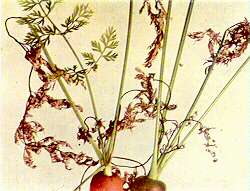 222. Carrot Plants
Calcium deficiency
Petioles collapse and leaves wither.
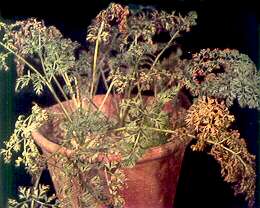
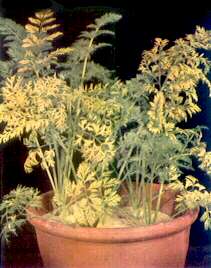 223. Carrot Plants
Magnesium deficiency
Older leaves strongly chlorotic.
 224. Carrot Plants
Potassium deficiency
Growth squat and leaves curl backward; leaflets of older leaves develop
marginal scorch, followed by general browning and collapse.
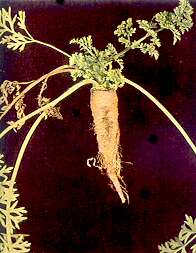 225. Carrot Plants
Boron deficiency
Growth of young leaves restricted giving a rosette effect, older leaves
orange tints; growing point may die.
| Index | ||
|---|---|---|
|
|
|
|
| Top of Page | ||
Color Pictures of Mineral Defeciencies in Plants – 1943
Using Hydroponics to Understand the Earth's Life Processes
Understanding Colloidal Suspensions
" The Art of Healing Ourselves "
The Diagnosis of Mineral Deficiencies in Plants by Visual Symptoms
by Thomas Wallace, M.C., D.Sc., A.I.C.
on the Atomic Level
The Tortoise Shell Hydroponic Reference Center
Plants need to absorb what you feed them.
Only You can bring Good Health and Healing into Your Body.